

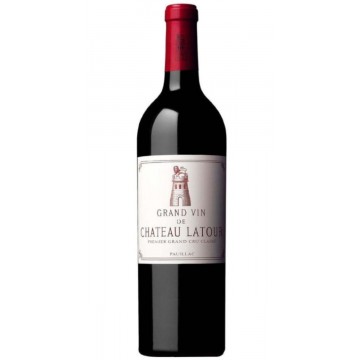
Chateau Latour
-
S$100
Your Choices Set:

In Bond. Arrive in June 2026
Vintage: Please Select Your Vintage
Region: Pauillac, Bordeaux
Country: USA
The $1 is a placeholder price. The actual price, applied at checkout, will be determined once the vintage is selected.
2004 | WE 97
The 2004 shows a "return to classic" style, marked by a dense, concentrated, and fresh character rather than extreme ripeness. It offers strong aromas of blackcurrant, graphite, cedar, tobacco, and mineral.
2006 | D 97
Rich, expressive, and savory with graphite, wood smoke, and black fruits.
2008 | D98
Masculine, rich, and intense, with excellent tannins, high purity of fruit, and a long, textured finish.
2011 | WE 97
While not as concentrated as the 2009 or 2010, it is praised for its finesse, intensity, and purity. It is described as a "stately" wine that is currently drinking well but has the structure to age until roughly 2050.
2012 | D 97
Silky, refreshing, and poised, with less intense power than top vintages (like 2009 or 2010), focusing on charm and precision.
2013 | D 93
Medium-bodied, focusing on purity, elegance, and finesse rather than power. Features polished, silky tannins with a savory, slightly herbaceous edge and a fresh, lingering, and spicy finish.
2015 | D 98
Medium-bodied, focusing on purity, elegance, and finesse rather than power. Features polished, silky tannins with a savory, slightly herbaceous edge and a fresh, lingering, and spicy finish.
About Winery
At bodythe beginning of the eighteenth century, Chateau Latour started to be highly recognized around the world, thanks to the reconquest of the British market and the development of the wine business in Northern Europe. The aristocracy and other wealthy groups of consumers became very enthusiastic about a few great estates, of which Latour was one. And that was how Thomas Jefferson, ambassador of the United States in France, and future President, discovered this wine in 1787. At that time, a cask of Chateau Latour was already worth twenty times as much as one of ordinary Bordeaux wine.
The reputation of Chateau Latour was consolidated during the 19th century. It was confirmed in 1855, when the government of Napoléon III decided to classify the growths of the Médoc and the Graves for the International Exhibition in Paris: Chateau Latour was classified as a First Growth. The existing chateau was built during this "Golden Age", between 1862 and 1864.
Château Latour is one of Bordeaux's – and the world's – most famous wine producers. It is situated in the southeast corner of the Pauillac commune on the border of Saint-Julien, in the Médoc region. Rated as a First Growth in the 1855 Bordeaux Classification, it has become one of the most sought-after and expensive wine producers on the planet, and produces powerfully structured Cabernet Sauvignon-dominant wines capable of lasting many decades.
Typically for the region, Cabernet Sauvignon dominates in the vineyard, accounting for around 80 percent of plantings. Merlot makes up most of the remainder, and there are also small amounts of Cabernet Franc and Petit Verdot.
About Winery
At the beginning of the eighteenth century, Chateau Latour started to be highly recognized around the world, thanks to the reconquest of the British market and the development of the wine business in Northern Europe. The aristocracy and other wealthy groups of consumers became very enthusiastic about a few great estates, of which Latour was one. And that was how Thomas Jefferson, ambassador of the United States in France, and future President, discovered this wine in 1787. At that time, a cask of Chateau Latour was already worth twenty times as much as one of ordinary Bordeaux wine.
The reputation of Chateau Latour was consolidated during the 19th century. It was confirmed in 1855, when the government of Napoléon III decided to classify the growths of the Médoc and the Graves for the International Exhibition in Paris: Chateau Latour was classified as a First Growth. The existing chateau was built during this "Golden Age", between 1862 and 1864.
Château Latour is one of Bordeaux's – and the world's – most famous wine producers. It is situated in the southeast corner of the Pauillac commune on the border of Saint-Julien, in the Médoc region. Rated as a First Growth in the 1855 Bordeaux Classification, it has become one of the most sought-after and expensive wine producers on the planet, and produces powerfully structured Cabernet Sauvignon-dominant wines capable of lasting many decades.
Typically for the region, Cabernet Sauvignon dominates in the vineyard, accounting for around 80 percent of plantings. Merlot makes up most of the remainder, and there are also small amounts of Cabernet Franc and Petit Verdot.
2004 | WE 97
The 2004 shows a "return to classic" style, marked by a dense, concentrated, and fresh character rather than extreme ripeness. It offers strong aromas of blackcurrant, graphite, cedar, tobacco, and mineral.
2006 | D 97
Rich, expressive, and savory with graphite, wood smoke, and black fruits.
2008 | D 98
Masculine, rich, and intense, with excellent tannins, high purity of fruit, and a long, textured finish.
2011 | WE 97
While not as concentrated as the 2009 or 2010, it is praised for its finesse, intensity, and purity. It is described as a "stately" wine that is currently drinking well but has the structure to age until roughly 2050.
2012 | D 97
Silky, refreshing, and poised, with less intense power than top vintages (like 2009 or 2010), focusing on charm and precision.
2013 | D 93
Medium-bodied, focusing on purity, elegance, and finesse rather than power. Features polished, silky tannins with a savory, slightly herbaceous edge and a fresh, lingering, and spicy finish.
2015 | D 98
Medium-bodied, focusing on purity, elegance, and finesse rather than power. Features polished, silky tannins with a savory, slightly herbaceous edge and a fresh, lingering, and spicy finish.

2+ for S$46588 each

6+ for S$96495 each
2+ for S$91796 each
2+ for S$1,23688 each
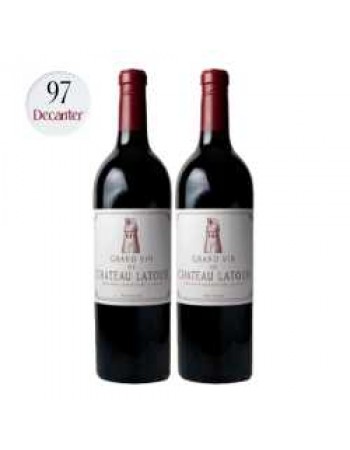
2+ for S$1,93085 each
2+ for S$1,09076 each
2+ for S$70495 each
2+ for S$93695 each
2+ for S$1,02395 each
2+ for S$7388 each
2+ for S$10297 each
2+ for S$39388 each
6+ for S$77595 each
6+ for S$71795 each
6+ for S$68295 each